


‘Shree Partner’ retains Va Pu’s original flavor
 |
Rating: na
Banner: Parv Creation, Samruddhi Creation Producer: Vimal Lohane, Sameer Ramesh Surve Director: Sameer Ramesh Surve Based on Novel: ‘Partner’ Music: Nilesh Moharir Cast: Satish Pulekar, Padmanabh Bind, Shweta Pagar, Lalan Sarang Movie Review by: Ulhas Shirke |
Vasant Purushottam Kale, popularly known as Va Pu, was a renowned Marathi novelist.
He wrote about 60 books but his most popular novel was ‘Partner’. Va Pu himself was so impressed by the character of Partner from his book that he himself played the title role in a Marathi play, which was staged sometime during early 80s. Being an architect by profession, the writer had rightly chosen ‘Accommodation problem in Mumbai’ as the backdrop of this love story of a young couple.
Va Pu’s ‘Partner’ was attempted in the form of a TV serial in the past. And now, Sameer Ramesh Surve makes his debut as a director through a feature film ‘Shree Partner’ based on this novel. Sameer, a great admirer of Va Pu’s literature, was very keen on making a film on ‘Partner’. Finally when he acquired the official rights, his dream came true.
Through this film, the director had the liberties of glorifying the characters; but he preferred to stick to originality in the script and only added few meaningful melodious songs to support the expressions of the three main characters in this film; i.e. the central character of Partner( Satish Pulekar), Shree ( Padmanabh Bind) and Kiran ( Shweta Pagar). All the songs are played in the background, to create their desired impact. Some intimate love scenes have also been shot with decency.
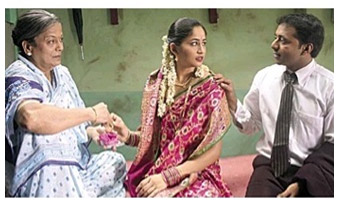
Very effectively, these three characters have been presented in the film’s screenplay so that the audience get the feeling of reading the original novel. Shree’s first meeting with Kiran, his first interaction with his so called ‘Partner’, who later offers him accommodation in the corridor of his house and later turns his Guru; his exploitation by his selfish mother, brother and sister in law, everything has been shown realistically. The director has cleverly used the term ‘third person’ making the life of Shree miserable.
The writer’s philosophy on alphabets W & M and using the same to show how a Wife becomes wiser after becoming Mother herself, have been picturised well. Though script is the heart of the film, it is the mesmerizing music of Nilesh Moharir , sensible lyrics of Ashwini Shende and melodious voices of Swapnil Bandodkar, Bela Shende and Madhuhree make this film more appealing. Deepali Vichare’s creative choreography during one of the songs and Sandeep Dhumal’s fabulous cinematography also invites attention.
In the central role of Partner, Satish Pulekar has given full justice to his fun loving but helpful character. Talented stage actor Padmanabh Bind plays the role of Shree with responsibility. Shweta Pagar, who makes her acting debut through this film, in an important role of Kiran, has proved that she is an actress to reckon. Perhaps, her training at Anupam kher’s acting school, has boosted her confidence . Lalan Sarang in the role of Shree’s mother doesn’t have much to offer, except for one scene, where she finds some scope. Others in the supporting cast have done a good job. ‘Shree Partner’ is certainly a well presented film, for retaining the original flavour of the celebrated writer.
‘Langar’ hits out at blind faith
 |
Rating: na
Banner: Shree Ganesh Marketing & Films Producer: Kumari Niharika S. Phadtare Director: Sandeep M. Naware Story: Sandeep M. Naware Music: Mandar Khare Cast: Ravi Kale, Manawa Naik, Aditi, Kishori Shane-Vij, Vinay Apate, Pankaj Vishnu, Milind Shinde, Bharat Ganeshpure, Namrata Gaikwad Movie Review by: Ulhas Shirke |
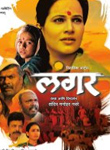
Time has changed and reforms are welcomed. But, still customary practices with blind faith, are followed in some villages in our country. Produced by Niharika Sunil Phadtare and directed by Sandeep Manohar Navare, new Marathi film ‘Langar’ throws light on injustice to children from a particular community in a village, where parents offer their children to God, just to keep their vows to God. One such girl Malan who is studying in school, is offered by her father (Vinay Apte) to the service of God, much against the wish of her mother (Kishori Shahane Vij), after she attains puberty.
Malan is taken away by her maternal uncle Jagan (Ravi Kale), who is himself deserted by his parents to the service of God. Deeply hurt, Malan soon forgets her family and joins the group of her uncle, aunty and others, to perform at religious functions with their folk performances entertaining the families. Men in this group are called Vaghya and women folks are called Murali. So, when Malan grows up, she is identified as ‘Murali’ and has no right to marry, as she is offered to the God in marriage.
But, when Malan meets Yashwant (Pankaj Vishnu), he proposes to her and promises to marry her soon. Malan crosses her limits against the wish of her uncle. Yashwant, who goes to city for some legal case, fails to return. Even her Uncle proceeds to other villages in search of work. When the uncle returns, he is criticized by the villagers and unable to bear the insults, he disappears one day. Yashwant does return back after six months; but, Malan refuses to marry him and drives him back. She takes over the business of her uncle and gives birth to her child. At the end of the film, which is actually the beginning, Malan is honoured by a Social activist, at a function held in a village, to boost her bold decision.
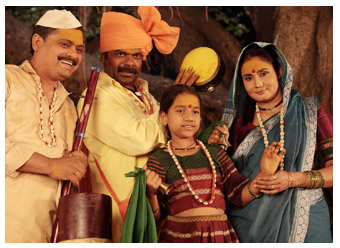
The film does pass a social message and hits out at blind faith and such customary practice. The effort of the film maker is sincere, capturing the right locations to create an impact. But, there is not much of opposition shown in the film, faced by the leading lady. Except for the reaction of her uncle and exchange of words with a local stone crushing contractor (Milind Shinde) who insults her; she doesn’t face much humiliation from the community. In fact, Jagan’s associates stand behind her. The character of Malan’s father though selfish, does not look realistic in some of the scenes, with his changing attitude. The same is the case with her brother Sagar’s character, who does not react, during reunion with his sister after several years.
It is also not clear, as to why the Uncle takes so long (almost few months) to return from his surrounding village trip, to discover that Malan is pregnant . Also there is no convincing explanation, as to why Yashwant returned after so many months. Moreover, when he is ready to marry Malan and accepts her would be child as his own child, why she refuses to marry him. Such incidences goes on to show that there wasn’t much sacrifice; but Malan repenting on her own mistake to trust a man of her choice. In fact, she is not left all alone; but, finds good helpful family of Jagan to support her.
In this film, Ravi Kale has come out with another superb performance in the role of Jagan. Kishori Shahane Vij does a good job through her emotion filled mother’s role. In the role of Malan, Manva Naik finds a better role for a change, to display variety through her acting and accent. Pankaj Vishnu is just fine in that limited role and so is veteran actor Vinay Apte in father’s role, though his character is not convincing. Bharat Ganeshpure and Namrata Gaikwad have done a good job, playing the family associates of Jagan. All others in the supporting cast have given their best.
Photography by Surya Mishra is good. He has captured the crowd scenes of devotees very well. Mandar Khare’s music is well suited to the theme of this film. ‘Langar’ is a festival kind of art film and not a mainstream cinema. And hence, those interested in such films and wanting to know the customary practices in villages, may like this film. But, will this film reach the target audience? Let’s wait and watch.
‘Pipani’ presents a Black comedy to deliver a timely message
 |
Rating: na
Banner: Tanishq Digital Eye Producer: Baburao Bhor Director: Gajendra Ahire Story, Screenplay, Dialogues, Lyrics: Gajendra Ahire Music: Chaitanya Adkar Cast: Makrand Anaspure, Chandrakant Kulkarni, Ravi Kale, Ramesh Dev, Kranti Redkar, Vaibhav Mangale, Satish Taare, Bharat Ganeshpure, Hemangi Kavi Dhumal, Vikas Samudre Movie Review by: Ulhas Shirke |
We are all aware that India is agriculture based country with around 60% of its population directly or indirectly dependent on agriculture, as their income. But, in India, Agriculture is often attributed as gambling with seasonal monsoon. The failure of seasonal monsoon, leads to a series of droughts. But, sometimes, un-seasonal monsoon showers, also creates havoc on crop with heavy loss, resulting in lack of better prices to farmers. But, mainly, it is the exploitation by the Middlemen, the main cause of a series of suicides committed by farmers across India.
It is said that on an average, one farmer commits suicide every 30 minutes in India. And, the state of Maharashtra is among the leading states reporting such tragedies. Latest released film ‘Pipani’ is all about this tragic situation in our country, which has been shot on the backdrop of a village in Vidarbha region in Maharashtra. Now, to highlight the situation, film maker Gajendra Ahire has used a plot, where a Hollywood film maker Freda Russel (Kristin Piesker) is shown making a feature film, to invite the attention of the world to this tragic state of farmers in this region and the reality behind it.
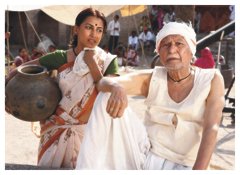
The film opens with a narrator Dnyaneshwar Tembhre (Chandrakant Kulkarni) a Circle officer of the Block, posted by the State Government. When he receives a request from his department to offer all the help to the visiting foreigner, he obliges by deputing Popat Jhadbuke (Makarand Anaspure) his most trusted man, to help the lady. Popat arranges her meetings with different people, beginning with Nanda (Hemangi Kavi), a widow, whose farmer husband has recently committed suicide.
Highly impressed with the location, when Freda returns with her unit team to shoot a film, her female character Kranti (an actress) seeks help from Nanda to be more realistic through her body language. The film also shows actor Ravi kale playing her husband and veteran actor Ramesh Deo playing her father in law. A Film which has been shot in this film, focuses more on the emotional part of the artistes and tries to show how the middlemen cheat the farmers from getting their dues. The scenes cover damage to crop due to un-seasonal rains and the helplessness of the farmers, forcing them to commit suicide.
But, what is more important is director Gajendra Ahire throwing light on other aspects; such as the effect of the happenings during the shooting, on the real life of the local villagers and how the middlemen in the film production department exploit the villagers. The director has tried to create humour through the character of Popat, who makes hard hitting statements in his typical style, blaming the administration for their apathy to uplift the lives of farmers with schemes and packages to boost their morale. There is one character who is shown as a helper to Popal (Vikas Samudre), who keeps on reminding him about the schemes.
Some form of humour is also created in one of the scenes, where Ravi kale, in an attempt to show his superiority to the actress kranti, tells her that he is a big actor, having worked with Mr. Amitabh Bachchan, when the veteran actor Ramesh Deo playing his old father is shown reacting, “So what ? I have performed with Rajesh Khanna and Amitabh Bachchan together.” There are many such humour filled sequences, which openly point out the neglect by the Government department, in finding the solution towards development of the Block. The transfer of the SDO to Pune, clearly goes on to say everything, after the shoot of the film is over.
The film conveys a strong message to the entire world about the ground level situation in this so called progressive nation. When Danny Boyle could make a film like ‘Slumdog Millionnaire’ projecting the slums of Mumbai in a cheap mediocre style, ‘Pipani’ has rightly concluded indicating that the film made by Freda Russel reflecting the real situation of the village can also win Oscars award. When Popat tells this news to an old villager, he replies, “What have we got?”. And, that delivers the film’s message. The film has openly used the advertisements of the sponsors, when Popat calls it an official break, before the commercial scene was played.
As a Hollywood director Kristin Piesker from Germany has done a good job. She is very much at ease, in her debut film. Makarand Anaspure is best suited in the role of Popat. Kranti Redkar finds the best opportunity to display her talent as an actress in search of a role, to win national award. Ravi kale, Chandrakant Kulkarni and Ramesh Deo look very natural in their respective roles. Vaibhav Mangle, Bharat Ganeshpure and Vikas Samudre have little to their share; but their presence counts. But, it is Hemangi Kavi, who invites all the attention. She presents a perfect village woman with her body language and excellent spontaneous expressions. Chaitanya Adkar’s music is well suited to this subject and backdrop and Chandrashekar Aiyer’s cinematography captures some of the realistic emotion filled scenes. Editing by Santosh Gothoskar is perfect. ‘Pipani’ produced by Baburao Bhor, is a sincere attempt to present reality through a cinematic format. You may call it a Black comedy.
‘Saad’ takes a call on Mother-Son emotional relationship
 |
Rating: na
Banner: Abhiruchi Films Producer: Hemant Dabhade Director: Hemant Dabhade Story: Anand Mhasvekar Story Development, Screenplay, Dialogues: Deepak Deulkar Music: Arvind Haldipur Cast: Anlesh Desai, Avantika Salian, Ila Bhate, Arun Nalavade, Yateen Karyekar, Prasad Pandit, Ravi Patvardhan, Sanjeevani Jadhav, Bhagyashree Rane, Vivek Pandkar, Yashwant Chopade, Mayur Pawar, Redhi Movie Review by: Ulhas Shirke |
“To a mother, a son is never a fully grown man; and a son is never a fully grown man until he understands and accepts this about his mother.” Latest released Marathi film produced and directed by Hemant Dabhade takes up a call from a mother living in a village near Pune in Maharashtra, for her son, who is thousand miles away from her, well settled in Malaysia.
The main plot of ‘Saad’ revolves around a 24 year old young man Rahul (Anlesh Desai) ,who is happily living with his well to do parents in Malaysia and is himself an executive in a company. He finds his companion in Sarika (Avantika Salian) from Mumbai , who is on deputation for 4 months in his Malaysia office. Both come closer and friendship grows between them, so much so that on one occasion both are found together by the youngster’s father- Mr. Deosthali (Yatin karyekar) in the bathroom of the house celebrating Rahul’s birthday.

Sarika returns to India and continues to be friendly with Rahul. When Rahul gets his promotion, he is given an option of US or India for his next posting. Surprisingly, he decides to opt for US to make his mother (Redhi) happy. But, a particular occurrence of an event in presence of father and son, takes him into his real past life. Rahul decides to proceed to Mumbai in search of his biological mother to know, why she deserted him.
After reporting for his job in Mumbai, he along with Sarika proceed to Pune, where his foster parents had adopted him, as a one year old child. But, is disappointed , as the Manager of the Children’s home refuses to reveal the name of his biological mother. Rahul gets the support from Sarika’s advocate father (Arun Nalawade). In the meanwhile he finds his accommodation as a paying guest in a posh house of a lonely middle aged lady (Ila Bhate), who treats him like his mother. After winning the legal battle, Rahul finally reunites with his biological mother, who is bed ridden. He comes to know the reality behind his birth and helplessness of his mother. Finally, the film concludes with his Malaysian parents coming to India to meet him, out of love and affection.
It’s not that we have not seen films based on this emotion based subject before. There were many such plots noticed in past Bollywood films. But, makers of ‘Saad’ must have felt that it was the right time to place before the Marathi audience this theme, originated from Anand Mhasvekar on Mother and son emotional relationship. So, writers Deepak Deolkar and Aarti Desai developed the theme into cinematic format with their screenplay and Deepak Deolkar along with Anand Mhasvekar working on the dialogues to make the film filled with emotional touch.
As a hero making his debut, Analesh Desai is just fine. He has to work harder, if he needs to compete with others. Avantika Salian shows promise, with her confident looking performance, though she has limited scope in this film. Veterans Yatin karyekar and Arun Nalawade make their presence felt with the working style of their own. As Rahul’s Malaysian mother- Redhi who also makes her debut in Marathi , just serves the purpose through her presence on the screen . Ila Bhate, Sanjivani Jadhav, Ravi Patwardhan, Prasad Pandit and Bhagyashree Rane have done well through their small roles. Newcomer Mayur Pawar is impressive in his mini role as Rahul’s office colleague, who finds him accommodation in Mumbai. He has succeeded in creating humour through few dialogues he has to his share, in this otherwise emotion filled film.

Music by Arwind Haldipur is satisfactory, but cinematography by Manjunath B Nayaka is superior. He has captured the outdoor locations in Malaysia very well, especially during a song sequence. ‘Saad’ is a sincere effort to present this emotion filled subject. But, few incidences like the boy initially opting for US posting instead of preferring India to reunite with his beloved, with whom he flirts in Malaysia singing and dancing, the use of ‘Planchet’ by the well educated father and son to take a decision, the concluding part where his so called uncle narrating his mother’s tragic story in flashback; and the forced item number, look unrealistic. But, barring these scenes, the film presents the different characters in proper order, making a right choice for their respective roles.
‘Dum Asel Tar’ has a social message
 |
Rating: na
Banner: Sagar Ramachandra Sakunde Films Producer: Sagar Ramachandra Sakunde Director: Vijay Gokhale Story, Screenplay: Advait Dadarkar Music: SAY Band, Laxman Patil Camera: Sameer Athalye Cast: Shankar, Smita Shevale, Manva Naik, Mohan Joshi, Anant Jog, Uday Tikekar, Vijay Gokhale, Ravi Patvardhan, Shubhangi Latkar, Ajita Kulkarni, Shital Karanjikar, Asmita Arya Movie Review by: Ulhas Shirke |
One does not know, whether it was the right time for Producer Sagar Sankude and director Vijay Gokhale to release their film ‘Dum Asel Tar’? They preferred the release time, during the most popular Ganapati festival in Maharashtra. The film has been released simultaneously with two other Hindi films with popular banners. Moreover, this Marathi film’s press show wasn’t held on Wednesday, as per the practice followed by other Marathi films.
‘Dum Asel Tar’, however has a good social message to convey through the script penned by Advait Dadarkar , with the hero Shankar ( Shankar Shingare) after realizing the crime committed by him in a hit and run case, killing a young boy; tries to help the family of the victim living in the slums. But, when the mother and sister Lata (Smita Shwale) of the victim, refuse to accept the help from him, being a politician’s son; he tries to create development in the slums, with the help of a schoolmaster Anna (Vijay Gokhale) from their area.
Shankar’s girlfriend Sonal (Manva Naik) who accompanies him during the accident in a drunken state after a pub party, is opposed to his plans. Moreover, Anantrao (Anant Jog) who is a close friend turned relative of Shankar’s father( Mohan Joshi) tries to blackmail him, having saved Shankar from the accident case. He plays his political game and also pressurizes Shankar’s father by harassing his newly wed daughter in law, who is Shankar’s sister.
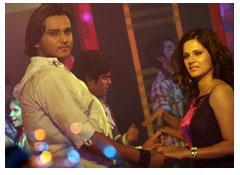
How Shankar faces the opposition from local goons in slums, in his mission to uplift the society and winning the confidence of Lata, is all that the film’s screenplay goes on to show. Finally, Shankar is forced to form a Political party with the support of youngsters, the schoolteacher and Jaggu dada, to fight a tough politician like Anantrao. The screenplay is fine; but the insertion of ‘dahi handi’ song hasn’t been timed well. But, music by ‘Say band’ and Laxman Patil sounds good. So are the meaningful lyrics. The cinematography by Samir Athlye is remarkable. He has shot the outdoor as well as close up scenes very well. Imran and Faisal Mahadik have done their editing job well.
Both Smita Shewale and Manva Naik have performed very well, understanding the limitations of their roles. The performances from all supporting artistes are impressive. Anant Jog and Mohan Joshi in particular, play their respective roles with authority. Shubhangi Latkar (as Shankar’s mother) finds enough scope to express her emotions in the concluding part. Uday Tikekar as Jaggu dada, Vijay Gokale as School master , Ravi Patwardhan as senior citizen, Vighnesh Joshi as TV Journalist, Ashutosh Gokhale in a supporting role and others have played their roles effectively, to give a realistic look to the film. Guest actor Bharat Jadhav adds extra flavor in the concluding part, as a committed news editor of a news channel.
However, in comparison to all these versatile artistes around, the hero of this film Shankar hasn’t been much impressive especially with his dialogue delivery in Marathi. He should have worked hard on this aspect, being a Maharashtrian himself. Simply possessing a good personality does not necessarily work in a Marathi film, which has ample talent around. He has to work hard over his Marathi, if he has to continue in Marathi films.

Moreover, the character of the hero in this film, shown as US returned young boy, does not indicate the same through his accent, which doesn’t sound like a NRI. The director seems to have paid less attention on this aspect. When the marathi audience couldn’t approve the Marathi school teacher presented by Jackie Shroff in a recently released marathi film ‘Hridaynath’, how would they react to Shankar in this film, remains to be seen . His marathi diction is the only drawback of this film, which is otherwise a sincere effort to present a social issue based theme, something new attempted in Marathi films.
‘4 Idiots’ goes the Bollywood way
 |
Rating: na
Banner: Madhu Entertainment Media Pvt. Ltd. Producer(s): Mayuresh Films and Entertainment, Guru Anand, Anant Walilkar Story: Milind Arun Kavade. Director: Milind Arun Kavade. Dialogues: Prakash Bhagwat Music: Mayuresh Pai Camera: Raja Phadtare Cast: Bharat Jadhav, Siddharth Jadhav, Guru Anand, Swapnil Joshi Movie Review by: Ulhas Shirke |
We have seen Bollywood inspired by Tollywood or Mollywood and vice versa. But, we have seen some of our Marathi films only inspired by Bollywood. When they saw success of 3 Idiots, they thought of making 4 Idiots. Why can’t our Marathi films have their own originality? And there is already a film titled ‘4 Idiots’ in the making, in Mollywood. However, this Marathi film ‘4 idiots’, has nothing to do with the script of 3 Idiots, but has some relevance to the style of Manmohan Desai and Prakash Mehra, with a touch of David Dhavan. . It is a tale of 4 friends – Bunty( Bharat Jadhav) , Qayuum( Siddharth Jadhav) , Kashi( Newcomer Swapnil Joshi) and Nagya( Guru Anand- the producer of this film) from Mumbai, who help each other in the time of crisis.
Qayuum is not steady with his job and Bunty is a pickpocket. Kashi is an Air conditioner Mechanic and a follower of a Bhondu Baba; while Nagya is a driver, who is dreaming of going to USA. When Qayuum’s mother is seriously ill and is to be operated upon , the other three friends raise money out of their savings and by selling their belongings. Bunty also manages a sizable amount, which he claims to have stolen from a non occupied house. When all of them fail in their attempt to raise enough money for their new lifestyle, Bunty comes up with a plan of bank robbery. Initially, the other three friends are reluctant; but, when they find that it is the best way of earning quick money, without killing anyone, they join Bunty’s plan.
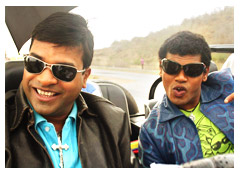 In the pre interval session, the film simply drags on to explain the background of each one of them and in showing the strong bonding of their friendship. But, in the post interval session, the film actually takes momentum, when we find a group of terrorists also entering the bank premises, almost coinciding with the visit of these four idiots. About 70 people are trapped inside the bank as hostages, including the bank’s staff, visiting customers and the 4 idiots.
The terrorists are looking for one Salma and her locker keys. They start searching for the lady and her locker keys. The terrorists then enter a deal with Bunty, to identify Salma.. Surprisingly, the ‘Azad kashmir’ terrorists speak in Marathi and claim to have learned Marathi for the past three years of their presence in Maharashtra. They are led by their leader, who demands the release of their chief from the jail, in return of hostages. With few twists and turns in the climax, we find the 4 idiots taking on the Four terrorists and coming out victorious. Each one of them learn a lesson and after three years, we find them engaged in their work of interest.
‘4 Idiots’ is purely an action comedy with nothing new in the script, except for the plot in the concluding session, dealing with the terrorists. The screenplay is good only in the concluding part. However, the dialogues by Prakash Bhagwat are hard hitting, when they are uttered at Politicians and the terrorists. The happenings in Politics, the pressure on Police by the Home Minister, the helpless attitude of home minister, the arrogance and selfishness of opposition Minister, whose daughter is trapped inside the bank, have been well presented. Music by Mayuresh Pai is just fine. The item number performed by Aarti Siolanki looks very odd. But, the background music by Salil Amrute is impressive. Raja Phadtare’s cinematography is good.
As a director, Milind Arun Kawade shows his strengths in post interval session, when he has tried to hold the audience to their seats. In the pre interval stage, there are unnecessary cheap jokes used as source of entertainment. Bharat and Siddharthg Jadhav play their respective roles almost on the style of Ashok Saraf and Laxmikant Berde. Producer Guru Anand has tried to fulfill his wish as a supporting actor with better scope, in the role of Nagya and has done well. In the role of Kashi, newcomer Swapnil Joshi is just fine in the company of 4 idiots in this film.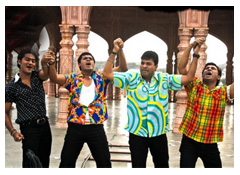
The females in this film have no scope at all. Vishakha Subhedar appears as kashis’s sister for a scene or two, while Siya Patil and Mrunalini Jambhale have been used as show pieces in the group trapped inside the bank. One doesn’t know, why did they accept such roles? Vaibhav Mangale is impressive in his role. He stands a chance to get offers from Bollywood, after this performance. There is a big crowd of supporting cast to create an impact of the sensational event occurring post interval, covered on television as breaking news! The effort of the film maker is good; but, the film does leave few drawbacks.
‘No Entry’ entertains; but, lacks Marathi touch
 |
Rating: 2.5
Banner: Underground Films Pvt. Ltd. Producer: Premnath Rajagopalan, Nikhil Saini. Director: Ankush Choudhary Lyrics: Guru Thakur Music: Nakash – Sargam Cast: Bharat Jadhav, Kranti Redkar, Ankush Choudhary, Saie Tamhankar, Aniket Vishwasrao, Manava Naik, Sai Lokur, Paddy (Pandharinath Kamble) Movie Review by: Ulhas Shirke |
Well, we are all aware that new Marathi film ‘No Entry Pudhe Dhoka Aahey’ is a remake of popular Hindi comedy ‘No Entry’. But, while making this film in Marathi, the entire film has been copied scene to scene, instead of offering it a Marathi touch. As a result, it has failed to hold the audience for entire 163 minute show on the screen. Nevertheless, being a sit- com, the film has succeeded in offering the expected entertainment through good performances coming from all the seven important artistes in the film.
The original film had succeeded in creating laughter, because the theme was new to the audience. Moreover, in Maharashtra most of the Marathi film goers watch Hindi films. Even if they haven’t watched this original film in theatres, they must have surely watched it on their TV screens and that too in repeat runs. All that was expected was a Marathi touch to this theme; but, it has gone the Bollywood way, even to the extent of retaining the names of all the characters. If they could change the name of MLA, why couldn’t they find suitable names for seven important characters ?
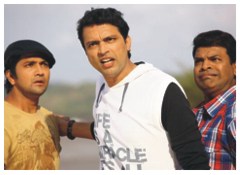
When we see some of the remakes of South films in Hindi, these original films are not watched by majority of the cine goers from places other than south region. And hence, such films whether action or comedy, turn out to be successful in North India including Maharashtra. But, same is not the case, with remake of Hindi film in Marathi. It may be kept in mind that about 50 % of the Hindi film’s business is from Maharashtra.
Now, the million dollar question still remains to be answered is, whether a remake of popular Hindi comedy film and that too with predictable sequences, will be accepted in Marathi ? Let, the people of Maharashtra decide the fate of this film. The opening day, witnessed very poor response at a multiplex in the suburbs. Now, the weekend collections will decide the success of this film.
Looking at the efforts put in, it may be mentioned that the film has been shot with the high quality standard observed in big budget Hindi cinema,, with good camera work by Arwind Soni and perfect music by Nakash-Sargam. The selection of locations are good, including picturesque Goa. Even the titles of the film have been presented well. But, there seemed to be some budgeting on costumes of the artistes and the dancers in the song sequences. In the case of Sai Tamhankar, who played an important character of Bobby, there wasn’t much issue of costumes, as the film has been focused on her. She is the centre of attraction in this film. And, she has lived up to the expectations of the film maker. One can say that she has offered more than what Bipasha could offer in the original, as far as glamour is concerned.
Looking at the performances of others, both Bharat Jadhav as Kishan and Kranti Redkar as Kajal match well in their respective roles, with their perfect timing for comedy. Aniket Vishwasrao as Shekhar gets a kind of role, which has tested his strengths in comedy sequences. And he has done extremely well. Manwa Naik playing Sanjana also supports well as his partner. Both Ankush Choudhary (Prem) and Sai Lokur (his wife Pooja) have limited scope, especially after interval, but they too have done well. Paddy kamble is just fine as Bobby’s bodyguard. Anant Jog is good as fun loving MLA. Viju Khote does well in the small role, he has to his share.
As predicted, this film is a musical sitcom with good performances. But, it has certainly failed to offer the Marathi feel to the characters.
Emotion filled ‘Kutumb’ turns a family entertainer
 |
Rating: na
Banner: Great Maratha Entertainment LLP Producer: Aniruddha Deshpande, Medha Manjrekar Director: Sudesh Manjrekar Story, Screenplay: Mahesh Waman Manjrekar Dialogues: Pravin Tarde Music: Ajit Parab, Sameer Mhatre, Abhijeet Kawthalkar Cast: Jitendra Joshi, Gauri Ingwale, Veena Janmkar, Mihir Soni, Siddharth Jadhav, Manasi Naik, Vaibhav Mangale, Bhalchandra Kadam, Prabhakar More, Sandeep Redkar, Sagar Karande, Shreeram Pendse, Ravi Sangwai Movie Review by: Ulhas Shirke |
Our Administrators say that the country is showing growth. Now, whose growth they are describing, that only our Prime Minister can explain. 70% of India’s population live in villages. They are either involved in farming or are doing labour work. Very few are self employed. Anyone who has struggled with poverty, knows how extremely expensive it is to get medical treatment, while suffering from serious ailment. Mahesh Manjrekar’s latest film ‘Kutumb’ revolves around one such family from a village Bhor in Satara district.
Namdeo and Ganga Solkar (Jitendra Joshi and Veena Jamkar) are happily married husband and wife with two school going children Laxmi (Gauri Engawale) and Subhan (Mihir Soni). Namdeo works as a Gardner in a bungalow in a nearby town and also does odd jobs to meet the demands of his children; be it a Pen drive of PC for his daughter or a Bicycle for his son. He wants to see them happy. But, when the back problem of his wife worsens and she is advised to undergo immediate operation, then comes the real test for him to raise money. Family neighborhood friend and School bus operator Magic Mamu (Siddharth Jadhav) and his wife Saira (Manasi Naik) come to their rescue; but, that’s not enough. Namdeo has to borrow additional money from the Moneylender on interest.
While Ganga is hospitalized, the children live with Magic Mamu and they raise money by performing dance at a local show in a nearby town and win a prize. But, Namdeo does not approve the idea. He beats up his children and insults Magic Mamu for encouraging his children into such an act, which relates to his past life. When Namdeo himself has to undergo a major operation, the children have no other option, but to take part in a dance reality show, with the help of Mamu Magic and his wife, to win a big cash award. With ups and downs in the life of Solkars, finally it is happy end.
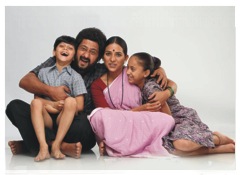
Director Sudesh Manjrekar does a good job to expand what ‘De Dhakka’ had left behind. With Mahesh Manjrekar himself being in charge of story and screenplay, the film has successfully converted an emotion filled script into a family entertainer. Iranian film director Majid Majidi seems to have left a strong influence on the director, while describing the village life and struggle of the poor family to meet hospitalization expenses. Looking at the demand for dance reality shows in our state and the talent displayed by kids , the link has been cleverly knitted with the children’s concern about the health condition of their parents and raising the money for the same.
All the characters have been cleverly placed in the screenplay. Jitendra Joshi bears a realistic look of a hardworking Namdeo. He has worked very hard through his body language. As Ganga, Veena Jamkar is a perfect choice and is very impressive in that role. Both the children have been chosen for their dancing skills required by their characters; but, they have performed very well in many emotion filled sequences too. As Magic Mamu, Siddharth Jadhav impresses, while Manasi Naik gets her dues after a long time, to perform an emotion filled role. Among the other character artistes, Viabhav Mangale as cunning moneylender and Bhalchandra kadam as a comedian have done well. There is not much to do for Music direction team of Ajit Parab, Sameer Mhatre and Abhijeet Kawthalkar, as most of the songs are record dances on original popular songs like, ‘Kombadi, ‘ Baygo baygo’ and others.
Photography by Ajith Reddy is good, capturing the real beauty of a picturesque village. Some of the dialogues are timely. There are many predictable happenings in the film, with screenplay giving a hint of the same on many occasions. But, the presentation of the same makes a big difference to make it entertaining.
‘Aghor’ – a timely theme without a grip
 |
Rating: na
Banner: Pratibha Films, Quality Cards Producer: Raju Jogeshwarji Ghivdhonde, Mangesh Pitale, Adv. Raman Senaad Story, Director: Salim Shaikh Dialogues: Salim Shaikh, Parag Ghonge Music: Nandu Honap Cast: Santosh Juvekar, Aniket Vishwasrao, Sai Tamhankar, Manasi Kulkarni, Kishori Shahane, Vinod raut, Tejaswi Patil and Shadab. Movie Review by: Ulhas Shirke |
Corruption has become part of every field of profession and medical profession is no exception. As there are good committed doctors, there are doctors, who are not only involved in unethical practices, but also involved in frauds and cheating business. In the name of Multi- speciality clinics, there are many malpractices noticed at many places in the state. This has come to light, through regular media expose. Recently, we also saw one such episode of Aamir Khan’s reality show, where such unethical practices were brought to light.
Latest released Marathi film ‘Aghor’, produced by a team of producers from Nagpur comprising of Raju Jageshwar Dhivdonde, Mangesh Madhukarrao Pitale and Ad. Raman Laxmanrao Senad and directed by their colleague Salim Shaikh, has exposed few such acts by a selfish doctor, who owns one such Multi speciality clinic. For Dr. Batra( Dr. Vilas Ujawane), profit is considered as a driving force in his business. The film shows all his ways to grab money from the patient, initially in the form of advance by getting first the details of his income in the admission form.
Though the main theme of this film is based on day to day newspaper and TV reports of corruption cases in medical profession, it is backed by frustration among unemployed youth and those in sports, who have been denied their dues. Dr. Sathe ( Ad. Raman Laxmanrao Senad) a principled and committed doctor, who runs his clinic with the help of his wife ( Kishori Shanae), regularly encounters three youths namely Prakash ( Aniket Vishwasrao), Sam ( Santosh Juvekar) and Lucky ( Shadab); and is well aware of their problems.
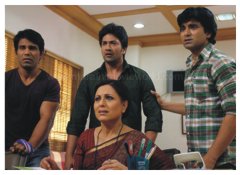
Sai Tamhankar, Santosh JuvekarOne day, Dr. Sathe in an attempt to save a little girl, is knocked down by a speeding vehicle. He is admitted to Dr. Batra’s hospital, who suggests an emergency operation and asks Ms. Sathe to deposit Rs 4 lakh immediately. The three youngsters raise the amount in their own ways and them begins the fight against Dr. Batra and his team. Luckily for them in a typical filmi style Dr. Batra’s close friend’s daughter( Manasi Kulkarni) and Dr. Batra’s own son join hands with them to teach a lesson to Dr. Batra, in his own way.
‘Aghor’ does have a good theme, but lacks grip in the screenplay . The efforts of the Nagpur based team to make a film on a social issue is highly appreciated; but, to create an impact, the screenplay and the order of sequences should have been handled more skillfully. The director, who is himself a story and screenplay writer, hasn’t paid much attention on this aspect. The first half of the film just goes on understanding the background of the three youngsters, besides knowing about the past love of Sam. The two songs in pre interval stage are okay; but the one picturised on Santosh Juvekar and Manasi Kulkarni hasn’t been timed well. At a time, when the film should have taken a firm grip on revenge, after noticing a serious case of crime, the break for a song only diverts the attention of the audience.
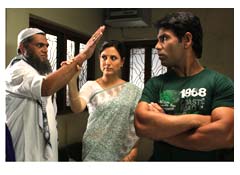
Some of the incidences, such as Sam’s first girlfriend( Tejaswi Patil) killing herself, Dr. Sathe trying to save the girl Kishori Shahane VIjon the road, Dr. Sathe shown too generous in treating his poor patients and the happenings in the climax; don’t give a realistic look. But, few events like a Medical representative of the company offering attractive packages to the Doctor for prescribing costly medicines in place of generic medicines; a Municipal contractor exploiting a senior old female worker, keeping the already dead patient on ventilator, forcing the husband to undergo test after he threatens to divorce his wife for not conceiving for eight years, the honest doctor understanding the psychology behind the attitude of youngsters; have been included in the film, to send across a message to the society.
There is not much scope for music in this film, but two songs by popular singers have been picturised well on new locations in Nagpur. The angry young man of Marathi films Santosh Juvekar has limited scope in this film. But, he has played his role with ease. Aniket Vishwasrao too, plays his part well. Newcomer Shadab has very little to do with acting, except for being with the two friends and punching rivals, whenever required. The three young girls have very little to their share. Sai Tamhankar as a lawyer, is just namesake girlfriend of Aniket Vishwasrao, with just few scenes. Manasi Kulkarni ( TV serial Mission.com fame) looks confident on her debut through few scenes, besides a song sequence. Tejasvi Patil is in the film almost like a guest performer. Producer Raman Senad gives a satisfying performance in the role of Dr. Sathe, on his debut. Dr. Vilas Ujavane plays the antagonist effectively. But, it is Kishori Shahane, playing Ms. Sathe, finds a better role. ‘Aghor’ is no doubt a sincere effort to expose corruption in medical profession; but it lacks the desired sensational cinematic approach to create an impact through its screenplay.
‘Bharatiya’ has a strong and timely message for the Government
 |
Rating: na
Banner: Devisha Films Producer: Abhijit Gholap Director: Girish Mohite Story: Aniruddha Potdar Screenplay: Anirudha Potdar, Sanjay Pawar Music: Ajay – Atul Cast: Subodh Bhave, Makarand Anaspure, Jitendra Joshi, Meeta Savarkar, Kuldeep Pawar, Hrishikesh Joshi, Tejashree Khele Movie Review by: Ulhas Shirke |
At a time, when we understand that our prime Minister is likely to announce free mobile sets to all those living below poverty line in this country; the release of latest Marathi film ‘Bharatiya’ is very timely, for the Government to rethink about their controversial decision. The film is produced by Abhijit Gholap( the maker of ‘Deool’) who won the national award last year. Now, his new film ‘Bharatiya’ sends across a strong message to the Central government, for their apathy to understand the real problems of rural poor, at the grass root level.
As we all know, some of the villages in India, do not have water, electricity and other amenities essential for living. How can earnings of Rs. 32 a day by a person, be treated as above poverty line? Can a PM himself live in a village and manage his day within this amount? There are no toilets for these people, but, there are mobiles. Why the villages on the borders of two states receive ill treatment ? Are they treated as Indians? What if they revolt against the system ? All such relevant issues are raised by this sensible film.
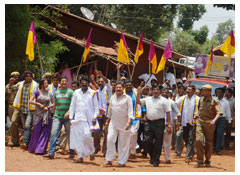
Directed by Girish Mohite, the film is set on the backdrop of a small village located on the border of Maharashtra and Karnataka. It talks about the neglect by two state Governments towards this village called Adnida. When time comes to prove the property rights of a family, it is observed that the village is neither under the jurisdiction of Maharashtra nor Karnataka. The issue is flared up, as a foreign returned youngster, who is in search of his ancestral rights over a property, raises his voice against the attitude of both the state Governments and central Government towards the village.
A Gypsy who is a fortune teller( Makarand Anaspure) , who wanders along with his Bull from village to village, is familiar with the miserable condition of this village. He predicts that a young man around 30, would come to this village and there will be a change with revolution. Soon, we find Abhay Sarpotdar ( Subodh Bhave) a protagonist in this film, coming to this village to trace the existence of his ancestral house in the village.
He finds that the Village head, Mr. Sarpotdar( Dr. Mohan Agashe) with his family and young daughter Sugandha( Meeta Savarkar) have occupied the big house claiming that it belongs to his ancestors. He claims the rights of the property, since living there for several years. On the suggestion of his daughter, he however allows the young man to stay in their house, till he proves his legal right over the property. Abhay moves from pillar to post with the help of village talathi to acquire the 7/12 ownership document. But, he finds that the village is neither in the jurisdiction of Maharashtra nor Karnataka. Even the respective states politicians refuse to offer any help, realizing that the village does not come under their constituency.
Taking the Head of the village and aspiring opposition politician Lote Patil ( Kuldeep Pawar) into confidence; Abhay plans a move to invite the attention of the Central Government. In the meanwhile, he traces a hidden treasure in the basement of the house, which is under lock and key for ages. Looking at the attitude of Government to give recognition to their village, Abhay goes on to declare Adnida as a separate country and appoints Sr. Sarpotdar as the Caretaker President, till the constitution is drafted. The issue flares up with the Central Government sending para military forces and seals the borders of the village. Media arrives and it becomes an international news, to invite the attention of the UN. Abhay plays his cards well, to bow down the prime Minister’s office for talks with them at their village. How he succeeds in his mission, the film’s climax is an answer.

Director Girish Mohite has handled this sensible script and screenplay of Aniruddha Potdar very well, with the help of humour filled dialogues of Sanjay Pawar, to make this film entertaining besides passing a strong timely message to the Government. In the role of a wandering fortune teller, Makarand Anaspure plays the Narrator. He very well suits in that role. As a protagonist, Subodh Bhave the lead hero has given a remarkable performance. He is simply superb in the climax scene. Meeta Savarkar( playing the Village head’s daughter) has limited scope, but her pairing with the hero goes well. Playing two rival opponents, both Dr. Mohan Agashe and Kuldeep Pawar are very impressive. Jitendra Joshi playing the role of Shripati(Kuldeep Pawar’s son) has timed very well with his comedy scenes with his father and others. Tejashree Khele, playing the daughter of the only Grocery shop owner in the village, plays the typical village girl with ease, displaying her skills well.
The other artistes comprising of Ujwala Jog (as Lote Patil’s wife), Shubhangi Latkar ( as hero’s mother), Sushant Shelar as Politician, Hrishikesh Joshi as Village Talathi, Pradeep Velankar as CM of Maharashtra, Manoj Joshi as Prime Minister , Suhas Shirsat and the producer Abhijit Gholap playing (as PMO’s representative in the last scene) have supported well, displaying good team work. In the post interval session, the film goes almost on a mockery of the existing system and therefore, the incidences like Cell phone jamming, the hero declaring aid from a neighboring country etc. could be taken in a lighter sense. Ajay Atul’s music is good, with one song by Kunal Ganjawala, in post interval session, inviting special attention. Lyrics by Guru Thakur and Sandeep Khare are well written to suit the screenplay. The film is a good attempt to offer wholesome entertainment with a strong timely message.